AI in Nepal: Government Plans, Policy, and Future Trends
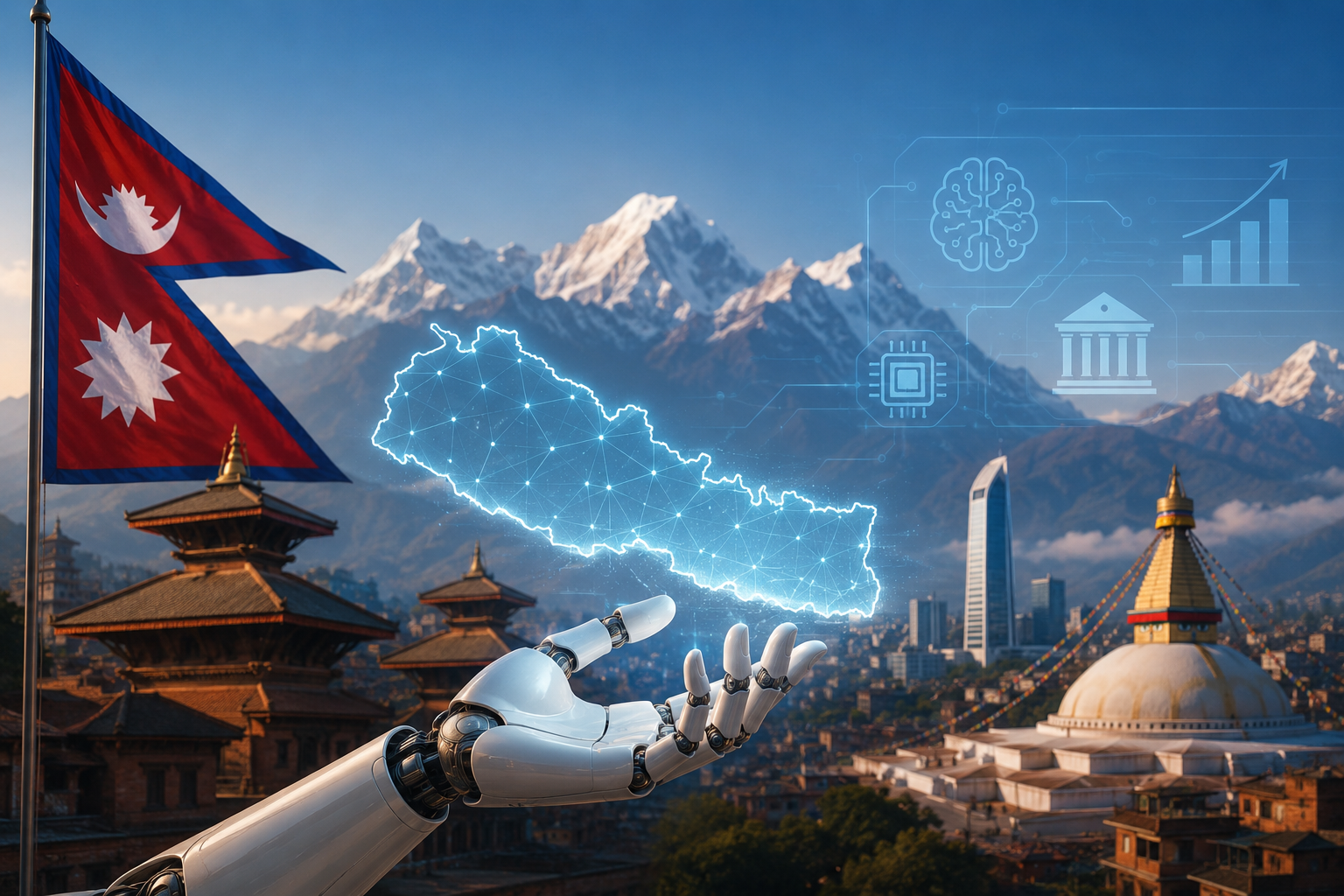
The world of intelligence has been ruled by big tech companies in Silicon Valley and Beijing for a long time.. Now something new is happening in South Asia. Nepal is making a change by not just using foreign software but by building its own technology.
People in Nepal with skills in software engineering are helping to make this happen. The countrys digital infrastructure is also growing. The government has launched initiatives to support this change. As a result artificial intelligence in Nepal is becoming more practical and less about research.
The government of Nepal is making policies to help artificial intelligence grow. They are also investing in infrastructure like internet and computer systems. Local companies are coming up with creative ideas using artificial intelligence.. There are still some challenges that Nepal needs to overcome.
This article looks at where artificial intelligence in Nepal stands today. It covers the policies, investments in infrastructure and local innovations. It also talks about the problems that lie ahead for Nepals intelligence sector.
1. The Catalyst: The Sovereign AI Compute Center
The biggest turning point that came for the development of AI infrastructures was through the initiative of the federal government for setting up a Sovereign AI Compute Center in Syuchatar, Kathmandu.
Traditionally, there was a huge obstacle for small local startups and even app developers and data scientists, which was due to the high cost of compute processing. Even building a small machine learning model would require hiring the resources such as GPUs from cloud-based service providers in other countries like AWS, Google Cloud, or Microsoft Azure.
| Metric | The Old Compute Way | The New Sovereign Way (Syuchatar Center) |
| Data Location | Processed on foreign servers (AWS, Google, Azure). | Stored and processed completely inside national borders. |
| Cost Matrix | High USD subscription fees paid to overseas tech giants. | Subsidized, concessional NPR rates for local builders. |
| National Economy | Continuous capital outflow and trade deficit. | Domestic retention of capital and digital assets. |
| Primary Beneficiary | Large enterprises with massive funding rounds. | Grassroots tech startups, researchers, and students. |
By deploying localized, state-owned server infrastructure equipped with thousands of dedicated AI processors, the government aims to democratize high-performance computing while guaranteeing data security for civic records.
2. The Hydropower Advantage: Powering “AI Factories”
One important element in the Nepal approach to digitization is the direct connection that exists between technology and natural resources. For instance, by using hydroelectric power, a source of renewable energy, to power data centers. The latest generation computing centers are highly dependent on energy in order to remain productive, but at the same time, they generate lots of heat.
| Parameter | Selling Raw Hydroelectricity | Running Domestic AI Factories |
| Product Format | Low-value wholesale electricity. | High-value computational processing power. |
| Target Market | Cross-border utility buyers at wholesale tariffs. | Global and local technology platforms, research labs. |
| Economic Return | Linear revenue based on simple commodity sales. | Exponential growth by generating digital service exports. |
| Infrastructure Link | cross-border high-voltage transmission lines. | Green, high-density local server farms and cooling systems. |
Instead of exporting raw electricity to neighboring countries at baseline rates, the state’s long-term plan is to route this renewable energy directly into national data centers. This turns cheap water energy into sustainable, green AI compute hosting.
3. Policy Architecture: The National AI Policy 2082 Framework
In order to ensure this process in the right way, the MoCIT formulated the Nepal National AI Policy 2082. This is a roadmap which has been formulated on the basis of certain pillars.
| Focus Area | Official Policy Milestone Target | Implementation Tool |
| Human Resource | Train 5,000 highly skilled AI experts within five years. | University alignment, bootcamps, and school curriculums. |
| Economic Growth | Increase the IT sector’s contribution to national GDP by 1%. | AI-driven automation in state and industrial operations. |
| Capital Allocation | Fund major infrastructure builds via state strategic reserves. | The Matribhumi (Motherland) Fund. |
| Brain Gain | Invite 15+ world-class Nepali AI researchers back home. | Prestigious international research fellowships. |
| Global Ranking | Break into the top 50 nations globally. | The International AI Readiness Index. |
Also Read : Starlink in Nepal
4. Practical Sectoral Applications in the Nepali Context
Artificial intelligence delivers the greatest impact when tailored to solve real, everyday local challenges. In Nepal, implementation is focusing on four primary sectors:
| Target Sector | Localized AI Application | Practical Outcome |
| Agriculture | Predictive machine learning models trained on localized weather history and soil data. | Provides precise planting calendars and early disease alerts for smallholder farmers. |
| Healthcare | AI-assisted diagnostic tools installed on low-cost tablets in rural health posts. | Enables early detection of respiratory and ocular issues where specialized physicians are unavailable. |
| Language & Governance | Large Language Models (LLMs) trained in local languages (Nepali, Maithili, Bhojpuri). | Allows citizens to interact with government portals and automated public services using native speech. |
| Tourism & Disaster Safety | Real-time computer vision monitoring along popular Himalayan trekking routes. | Predicts avalanche risks, tracks foot traffic, and automates emergency distress protocols. |
5. Horizon Trends vs. Structural Roadblocks
As the local ecosystem matures, tech builders must navigate emerging industry trends alongside persistent infrastructure gaps.
| Emerging Tech Trends in Nepal | Existing Structural Roadblocks |
| FinTech Automation: Local digital wallets deploying fraud detection and automated micro-credit scoring systems. | The Digital Divide: Stable high-speed internet is limited to major hubs like Kathmandu and Pokhara; rural zones lag. |
| Advanced BPO Scaling: Transitioning from basic data entry to high-value AI data labeling and reinforcement learning datasets. | The Brain Drain Dilemma: Talented software engineers frequently emigrate abroad for competitive international salaries. |
| Academic Reform: Introduction of dedicated machine learning and data science tracks across top national universities. | Legal Gaps: The urgent need for comprehensive data privacy laws, copyright guidelines, and deepfake regulation. |
The Bottom Line: Nepal’s approach to artificial intelligence highlights an important reality: developing nations do not have to be passive bystanders in the technological revolution. By powering domestic data hubs with renewable hydropower and supporting local developers, Nepal is taking a deliberate step toward tech independence.



Post Comment