What is Vibe Coding? The AI Programming Trend Changing Software Forever
Remember when learning to code meant losing three hours of your life to a single missing semicolon? Or spending weeks mastering complex syntax just to build a simple web interface?
Well, the landscape of software engineering has officially shifted.
Enter vibe coding—the viral software development phenomenon that has taken the tech world by storm. Coined by legendary computer scientist and OpenAI co-founder Andrej Karpathy, vibe coding represents a radical paradigm shift. It moves human creators away from line-by-line syntax drafting and pushes them into the director’s chair of application architecture.
But what is vibe coding exactly? Is it a genuine productivity breakthrough, or just an overhyped tech buzzword? Let’s break down how this trend works, the tools driving it, and why the future of programming feels a lot more like a conversation than a math equation.
What is Vibe Coding? A Definition
At its core, vibe coding is an AI-assisted software development practice where a builder creates, refines, and deploys full applications using natural language descriptions instead of writing source code manually.
Instead of typing JavaScript, Python, or Rust, you explain your intent to an advanced Large Language Model (LLM) or autonomous coding agent. The AI interprets your requirements, architects the file structures, writes the backend logic, styles the user interface, and spins up the application.
When you vibe code, you don’t micromanage the syntax; you guide the project’s overall “vibe.” As Andrej Karpathy famously put it when introducing the concept:
“There’s a new kind of coding I call ‘vibe coding’, where you fully give in to the vibes, embrace exponentials, and forget that the code even exists.”
In this ecosystem, English (or any human language) becomes the ultimate, high-level programming language.
How the Vibe Coding Paradigm Works
Traditional software engineering relies heavily on imperative execution—telling a computer how to perform a task step-by-step. Vibe coding turns this on its head by focusing entirely on declarative intent—telling the AI what you want to achieve and letting it figure out the execution.
A standard vibe coding workflow follows a distinct, cyclic loop:
[ Describe Intent ] ➔ [ AI Generates Code ] ➔ [ Review & Test ] ➔ [ Prompt Refinement ]
       ▲                                                                   │
       └───────────────────────────────────────────────────────────────────┘
-
Describe Intent: You type a high-level feature or app idea into an AI-native development tool (e.g., “Build a pomodoro timer that tracks focus sessions and syncs to a local database”).
-
AI Generates & Orchestrates: The AI creates the frontend components, writes the backend routes, and configures database connections automatically.
-
Review & Run: You review the visual interface or run the application in a sandbox environment to see if it functions as intended.
-
Refine via Prompting: If a button layout looks off or a feature bugs out, you don’t open the file to fix lines of code. Instead, you talk to the AI like a project manager speaking to an engineer: “The reset button needs more padding, and make the timer sound gentler.”
Vibe Coding vs Traditional Coding: The Trade-offs
Is traditional engineering obsolete? Not exactly. While vibe coding offers unprecedented velocity, it introduces new architectural responsibilities. Understanding how it stacks up against classic development highlights both its immense power and its core limitations.
| Attribute | Traditional Coding | Vibe Coding |
| Primary Skill | Syntax proficiency, debugging, logic tracing | System architecture, precise prompting, product design |
| Development Speed | Hours to weeks per feature | Minutes per feature |
| Barrier to Entry | High (Requires months/years of technical training) | Very Low (Accessible to non-technical creators) |
| Best Used For | Core infrastructure, optimization, security-critical apps | Rapid prototyping, MVPs, automation scripts, UI design |
| Core Risks | Human syntax errors, slow velocity | Technical debt, hidden AI bugs, lack of granular control |
Top Vibe Coding Tools Dominating the Industry
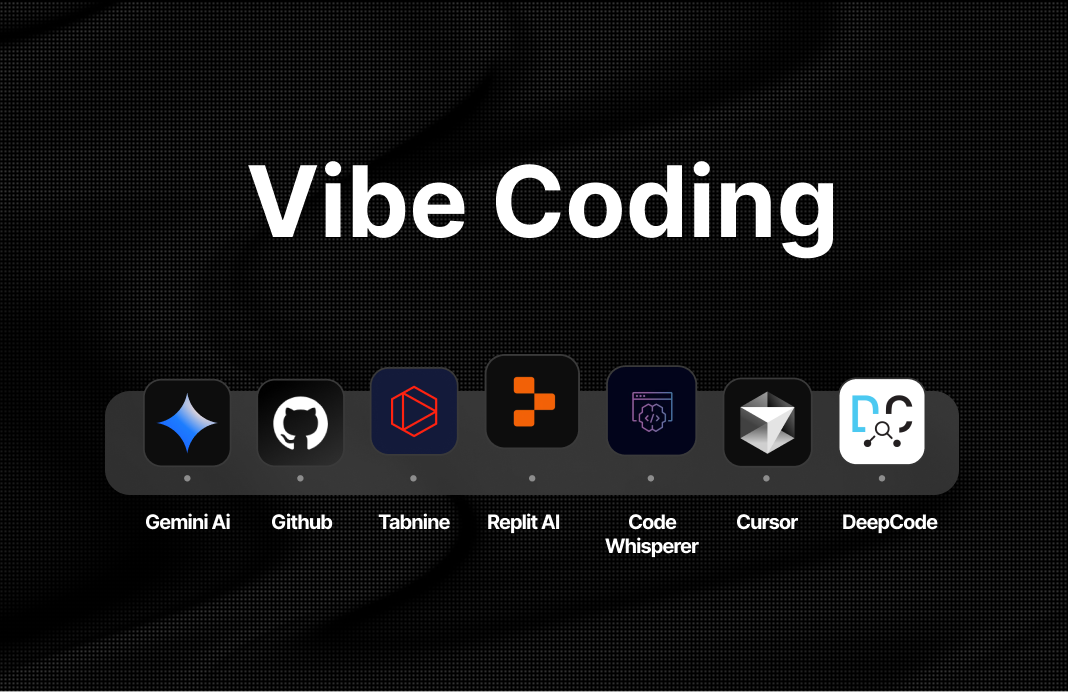
The explosive growth of the vibe coding programming trend is driven by a powerful new class of AI code editors, sandboxed web environments, and terminal-based agents. If you want to jump into the movement, these are the leading platforms defining the ecosystem:
-
Bolt.new / Bolt.diy: An incredible browser-based full-stack engine that builds, runs, and deploys applications entirely inside a web container, allowing you to go from prompt to live URL in minutes.
-
Lovable: A comprehensive vibe-coding platform built to transform plain language descriptions into beautifully polished, deployed web apps seamlessly.
-
Cursor / Windsurf: Next-generation, AI-first Integrated Development Environments (IDEs) that allow developers to chat directly with their entire codebase, refactoring huge chunks of logic with high-level commands.
-
v0.dev by Vercel: The go-to tool for frontend vibe coding, instantly generating production-ready React components styled with Tailwind CSS from simple text UI layouts.
-
Claude Code / Mistral Vibe: Powerful, autonomous terminal-based tools designed for faster, developer-centric command-line workflows driven by conversational AI.
Best Practices: How to Vibe Code Without Crashing Your App
Because vibe coding relies heavily on AI interpretation, it can occasionally output brittle logic or hit context window walls if guided poorly. To keep your codebase clean and your applications stable, follow these essential engineering guardrails:
-
Adopt a “Zero-Trust” Approach: Treat your AI assistant like an incredibly fast, highly enthusiastic junior developer. Always test its edge cases. Just because a feature looks like it works on the surface doesn’t mean it handles unexpected errors safely.
-
Keep Prompts Atomic: Don’t ask the AI to build an entire social media platform in a single prompt. Break your app down into tiny, modular steps. Build the login form first, verify it works, create a checkpoint, and then move on to the user feed.
-
Leverage Context Files: Before starting a massive prompting session, provide the AI with structural context. Use clear markdown documentation, database schema definitions, or project rules (
AGENTS.mdconfigurations) to keep the AI aligned with your existing tech stack. -
Maintain Version Control Checkpoints: Because AI agents write code at blistering speeds, they can occasionally introduce regressions that break older features. Commit your code frequently to Git or use your tool’s historical snapshot feature so you can easily roll back to a stable state if a “vibe” goes sideways.
The Verdict: The Future of AI Software Development
Vibe coding isn’t just a fleeting trend; it represents a permanent layer of abstraction in computer science. Just as object-oriented programming abstracted away binary punch cards and assembly languages decades ago, natural language interface tools are abstracting away mundane syntax management today.
For experienced software engineers, vibe coding acts as a massive force multiplier, clearing out boilerplate setup tasks so they can focus heavily on complex system design, deep security integrations, and product innovation. For non-technical founders, creative designers, and students, it democratizes the power of creation—turning software concepts into tangible, working realities faster than ever before.
The future of software development belongs to those who know how to articulate their vision, structure their logic, and master the digital vibes.

Post Comment